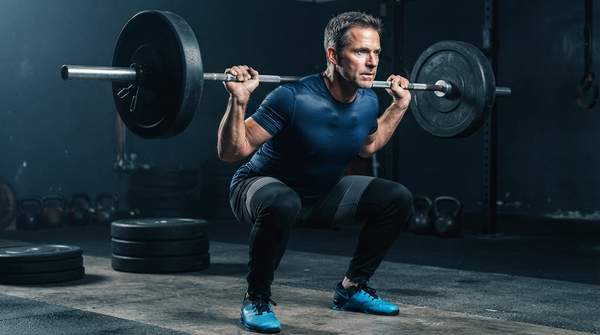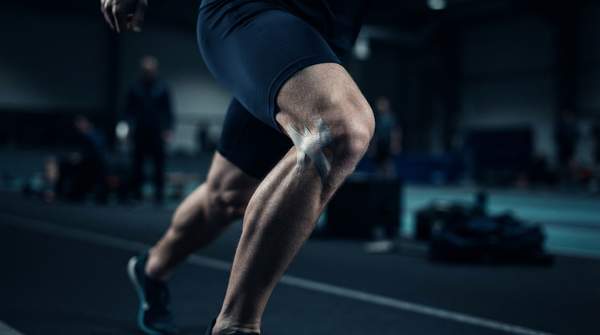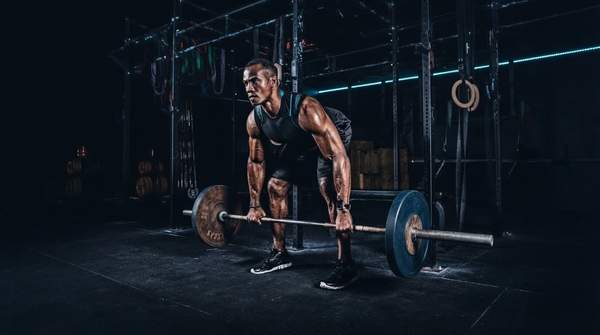
For lifters committed to sustaining heavy training and preventing injury throughout their lives, actively strengthening tendons and ligaments is as critical as building muscle. These vital connective tissues, often overlooked, possess unique physiological properties and adaptive responses to mechanical load that differ significantly from muscle tissue. By understanding these distinctions and applying evidence-based training strategies, particularly specific loading protocols like isometric holds, lifters can enhance the resilience of their connective tissues, ensuring long-term joint stability and efficient force transmission.
The Unique Biology of Tendons and Ligaments
Tendons and ligaments are fundamental components of the musculoskeletal system, each serving a distinct yet complementary role in movement and stability. Tendons connect muscle to bone, facilitating the transfer of force generated by muscles to create movement, absorb impact, and transfer force. Ligaments, conversely, connect bone to bone, providing crucial stability to joints and keeping them properly aligned. Both tissues are primarily composed of fibroblasts and an extracellular matrix, with collagen fibers being the key element responsible for their remarkable tensile strength and stiffness.
The mechanical backbone of these tissues is collagen, and their strength and stiffness are directly determined by the amount of collagen they contain. However, long, thin collagen molecules alone cannot effectively transfer force; they require chemical crosslinks that bind them together. These crosslinks are essential for creating a stiff connective tissue capable of efficiently transmitting force. When subjected to mechanical loading, such as during lifting, tendons and ligaments adapt by synthesizing new collagen and forming additional crosslinks. This process increases their capacity to withstand tensile forces without sustaining injury, contributing to an elastic recoil effect known as the stretch-shortening cycle, which is vital for dynamic movements like running, jumping, and lifting heavy objects.
Connective Tissue vs. Muscle: A Different Adaptive Response
While both muscle and connective tissue adapt to exercise, their cellular responses differ significantly, particularly concerning collagen synthesis. According to molecular exercise physiologist Dr. Keith Baar, cells within tendons, ligaments, and intramuscular connective tissue do not respond to exercise in the same way muscle does. Unlike muscle, which continues to adapt as long as it is active, connective tissue cells behave more like those in bone, rapidly shutting off their collagen synthesis response shortly after the onset of exercise.
This rapid shut-off has important implications for optimizing training frequency and timing. To effectively increase collagen synthesis and improve connective tissue stiffness, training protocols must account for this unique adaptive characteristic. This means that continuous, prolonged loading might not be as effective for connective tissue adaptation as strategically timed, distinct loading sessions. Understanding this difference is essential for designing training programs that maximize the adaptive benefits for both muscle and connective tissue, thereby enhancing overall performance and injury prevention.