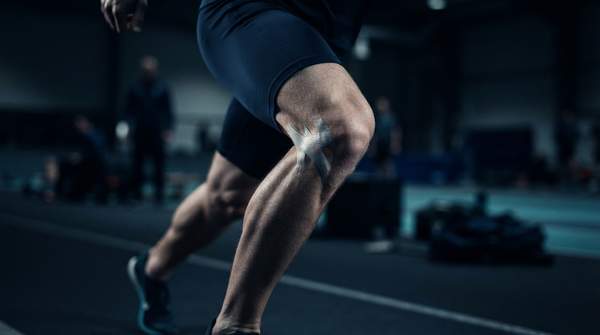
AI models can now accurately predict an athlete's injury risk and performance fluctuations in real-time, long before any physical symptoms appear. This capability offers a granular view into an athlete's physiological state, allowing for precise adjustments to training and recovery protocols. Such advanced insights are reshaping how athletic performance and injury prevention are managed in 2026.
However, there is a significant unmet medical need to assess, develop, and validate wearable technology specifically for sports medicine, according to Nature. Despite this, existing AI and IoT capabilities already offer powerful, proactive injury prediction and performance optimization. A critical gap exists between technological advancement and established medical standards.
Companies and individuals who invest in and properly integrate these advanced monitoring and analytical tools will gain a significant competitive edge in athletic development and long-term athlete health.
Personalized Performance: The Core of Wearable Tech
Wearable monitoring systems provide continuous physiological data, enabling accurate treatment plans and player-specific training programs to potentially mitigate and alleviate injuries, according to Nature. This continuous data empowers coaches and medical staff to tailor programs precisely to an individual's needs, moving beyond one-size-fits-all approaches for optimal athletic performance and injury prevention.
1. Advanced Wearable Monitoring Systems
Best for: Professional sports teams and elite athletes seeking comprehensive data
These systems continuously monitor physiological data, allowing for accurate treatment plans and player-specific training programs. They quantify workouts, calculate Acute:Chronic Workload Ratio (ACWR), and predict injury onset.
Strengths: Comprehensive data collection; aids in injury prediction and personalized training; supported by multiple authoritative sources. | Limitations: Requires expert interpretation; potential for data overload; cost can be high. | Price: Varies significantly by system complexity.
2. AI-Powered Predictive Analytics
Best for: Sports organizations focused on proactive injury mitigation and performance optimization
AI models accurately predict injury risks and performance fluctuations through real-time IoT data, enabling proactive intervention in sports, as highlighted by PMC. This technology processes vast datasets to identify subtle patterns.
Strengths: High accuracy in risk prediction; enables timely interventions; optimizes training loads. | Limitations: Depends on quality of input data; ethical considerations of data privacy; requires specialized AI infrastructure. | Price: Subscription-based or custom integration.
3. Pedometers and Accelerometers
Best for: General fitness tracking and basic movement quantification
These devices show a relative difference between actual and reported mean step counts of −0.3% to 1.0%, according to Nature. They serve as foundational tools for quantifying movement.
Strengths: Simple and accessible; provides basic activity metrics; highly accurate for step counting. | Limitations: Limited physiological data; does not offer advanced predictive analytics; less useful for complex athletic movements. | Price: $20 - $100.
4. Garmin Devices
Best for: Endurance athletes and outdoor sports enthusiasts
Garmin devices excel in GPS accuracy, endurance tracking, multisport modes, and provide metrics like VO₂ max, training readiness, and overall performance, notes Inkin. They are designed for robust outdoor use.
Strengths: Superior GPS; extensive sports-specific features; durable for outdoor conditions. | Limitations: Interface can be complex; higher price point for advanced models; less focus on medical-grade health sensors. | Price: $150 - $1000+.
5. Apple Watch (Series 10 & Ultra 3)
Best for: Everyday users and athletes seeking integrated health and fitness tracking
The Apple Watch, including Series 10 and Ultra 3 models, includes advanced health sensors such as ECG, SpO₂, and temperature, according to Inkin. These sensors monitor key physiological states.
Strengths: Comprehensive health monitoring; seamless integration with iOS ecosystem; robust app library. | Limitations: Battery life can be shorter for intensive use; primarily relies on wrist-based data; not always designed for extreme sports. | Price: $400 - $800+.
6. Oura Ring
Best for: Individuals prioritizing sleep, recovery, and overall well-being
The Oura Ring offers approximately 7–8 days of battery life and provides personalized daily scores for Sleep, Activity, Readiness, and Resilience, states Inkin. Gen3 Horizon models offer similar core sensors at varying price points.
Strengths: Excellent battery life; focus on recovery metrics; comfortable and discreet design. | Limitations: Limited real-time workout tracking; subscription required for full features; no screen for immediate data. | Price: $300 - $400, plus subscription.
7. WHOOP Fitness Trackers (5.0 MG Life & 4.0)
Best for: Athletes and individuals with high-performance lifestyles
WHOOP Fitness Trackers, including the 5.0 MG Life and 4.0 models, are specifically designed for athletes and high-performance lifestyles, offering continuous monitoring, according to Inkin. They emphasize recovery and strain.
Strengths: Continuous physiological monitoring; detailed recovery insights; designed for athletic rigor. | Limitations: Subscription-based model; no screen for data display; focuses heavily on recovery, less on immediate performance metrics. | Price: Subscription required, device often included.
Beyond Reaction: Predicting the Future of Performance
The ability of AI to predict risks and fluctuations in real-time allows for interventions before problems manifest, fundamentally changing injury prevention. This moves athletic care from a reactive stance to a proactive strategy.
| Feature / Approach | Traditional Sports Medicine (Reactive) | AI & IoT Driven Sports Medicine (Proactive) |
|---|---|---|
| Data Collection | Periodic assessments, self-reporting, physical exams | Continuous physiological data via wearables |
| Injury Management | Treatment after injury onset, rehabilitation | Prediction of injury risks before symptoms appear |
| Performance Optimization | Generalized training programs, coach observation | Personalized training programs based on real-time data |
| Decision Making | Experience-based, anecdotal evidence | Data-driven insights, predictive analytics |
| Intervention Timing | Post-event or symptom-driven | Pre-emptive, real-time adjustments |
| Impact on Athletes | Recovery focus, time off for healing | Sustained performance, reduced downtime, enhanced longevity |
The Proactive Revolution in Sports
The use of AI and IoT technologies enables proactive intervention, offering a significant competitive edge in performance and injury management, according to PMC. This advantage exists even as the broader medical community struggles to validate the underlying wearable technology, as noted by Nature, introducing new ethical and medical responsibilities for professionals employing these sophisticated, yet potentially unverified, tools.
If sports organizations fail to integrate AI-driven predictive tools, they will likely cede a competitive advantage in athlete longevity and performance optimization by 2026.