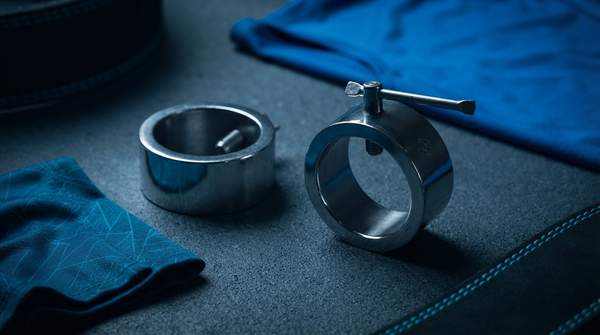
The best barbell collar depends on what you lift, not on any single "best" product. For heavy deadlifts and meet prep, competition-style collars are the most secure choice; for powerlifting on a standard bar, aluminum cam-lever collars lead; for gyms full of specialty bars, wing-nut clamp collars like Prolocs fit where others won't; and for budget home gyms, generic lock-jaw clamp collars offer the best balance of price and grip. Spring collars, the cheapest option, should be a last resort for serious lifting.
Introduction: Why Your Collars Matter
Collars are the most overlooked safety device in most gyms. Their core job is holding power: keeping plates from walking along the bar during pulls and drops, as the home gym reviewers at Massenomics put it. When a collar fails under load, plates shift mid-set, which changes the balance of the bar and can turn a heavy pull into a dropped or unevenly loaded lift.
Compatibility matters just as much as grip. Some collars simply won't seat properly on axles, safety squat bars, or strongman implements, so lifters with specialty bars need to check fit before buying. Durability is the third factor: aluminum bodies and robust hinges outlast bargain plastics, and plastic clamp collars can lose bite as their rubber liners and locking mechanisms age. This guide compares collar types, not every model on the market, and covers standard 2-inch/50mm Olympic barbells only.
Understanding Barbell Collar Types
Four categories cover nearly everything a serious lifter will encounter. Spring collars are the thin metal clips shipped with many barbells. They are, in Massenomics' blunt verdict, "only if you must" — they hold, but that's about it. They're cheap, quick to squeeze and slide, and easy to hang on a rack, but plates can creep during heavy pulls.
Generic lock-jaw clamp collars pair a plastic body with a rubber liner and a locking lever, typically around $20 per pair. Massenomics calls them the best budget pick you won't hate using: a big upgrade over springs with a fast lever action, though they lose bite with age and abuse. Aluminum cam-lever collars, such as Rogue's, use a metal body and lever mechanism for a stronger, more durable grip. Competition collars — the Ivanko-style 2.5 kg steel screw type — are heavy, accurate, and expensive, and Joe Gray of Gray Matter Lifting notes they are the competitive lifter's ideal solution.
Evaluating Collar Security: What to Look For
Marketing claims mean less than repeatable tests. The reviewer at King of the Gym tested every Lock-Jaw model side by side using two methods worth copying: vertical hold testing and repeated drop testing. The drop test loaded 245 pounds total — 200 pounds of plates plus a 45-pound bar — and dropped it at least six times from the top of a deadlift, including intentionally uneven drops to increase impact forces.
The logic is simple: if a collar holds plates in place through deadlifts, sloppy or fast sets, and Olympic-style drops, it will hold in real training. Vertical hold testing complements this by measuring static security — how far plates migrate under sustained downward pressure. In that testing, the top-performing clamp collar showed no noticeable movement after multiple drops and only about 1.5 mm of migration even after bodyweight stomping. That's the standard to look for. Plate "walking" or "creeping" happens when a collar's grip is weaker than the forces generated by the lift, which is why weaker collars fail precisely on the heavy, dynamic lifts where failure matters most.
Barbell Collar Comparison: Key Features and Trade-offs
The table below maps the four main collar types against the criteria that drive the buying decision: what each is best for, how well it holds, how fast it goes on and off, whether it fits specialty bars, and roughly what it costs.
| Collar Type | Best For | Holding Power | Ease of Use | Specialty Bar Compatibility | Typical Cost |
|---|---|---|---|---|---|
| Spring collars | Budget gyms, curls and light work | Weakest; plates can creep during heavy pulls | Quick squeeze-and-slide, but can be cumbersome | Generally fits standard sleeves only | Budget |
| Generic lock-jaw clamp | General training and powerlifting on a standard bar | Good; varies by model, some excel in drop tests | Fast one-hand lever action | Standard sleeves; limited on thick implements | Budget (~$20/pair) |
| Aluminum cam-lever (e.g., Rogue) | Powerlifting on standard bars; specialty bars | Strong, durable metal grip | Fast lever action | Good; Proloc-style wing-nut clamps work on axles, SSBs, and implements | Mid-tier |
| Competition collars (e.g., Ivanko-style) | Meet prep and max deadlifts | Rock-solid once set | Slow; fiddly screw mechanism | Standard competition sleeves | Premium |
Reading the table, two patterns emerge. Security and speed trade off directly: competition collars hold best but are slow to apply, while spring collars are fast but hold worst. The cam-lever category is the compromise point, which is why it anchors most powerlifting recommendations.
Choosing the Right Collar for Your Training Style
Match the collar to your actual training. For a budget home gym, Massenomics recommends generic lock-jaw clamps — the best budget pick that still grips. For powerlifting on a standard bar, their pick is Rogue aluminum or Strength Co. collars, which balance holding power with fast lever action.
If you own lots of specialty bars — axles, safety squat bars, farmer's handles — go with Strength Co or Proloc collars, whose wing-nut clamp design seats on implements that standard collars won't. Garage Gyms' reviewer prefers Rogue Axle Collars for specialty bars but notes Prolocs work well too, with the caveat that he dislikes turning knobs and screws. For meet prep and heavy deadlifts, Ivanko-style 2.5 kg competition collars are the choice: rock-solid once set, and they add an exact 2.5 kg per side so your training weights match competition standards. If you compete in sanctioned events, you may be required to use IWF- or IPF-certified brands such as Ivanko, Rogue, or Uesaka. Spring collars should not be your only collar.
Making Your Choice: Secure Your Lifts
Select barbell collars based on your primary training style, the types of barbells you use, and your budget, prioritizing security for heavy or dynamic lifts. A lifter chasing a max deadlift needs competition-grade security; a lifter rotating plates between axles and farmer's handles needs versatility; a general home lifter needs dependable grip at a fair price.
The measurable indicators that your choice worked: reduced plate migration during lifts, quicker plate changes between sets, and compatibility with all your barbells. Test your own collars the way the reviewers do — load the bar heavy, drop it from the top of a deadlift repeatedly, and check whether the plates stay put. If they creep, upgrade before the creep happens mid-attempt.